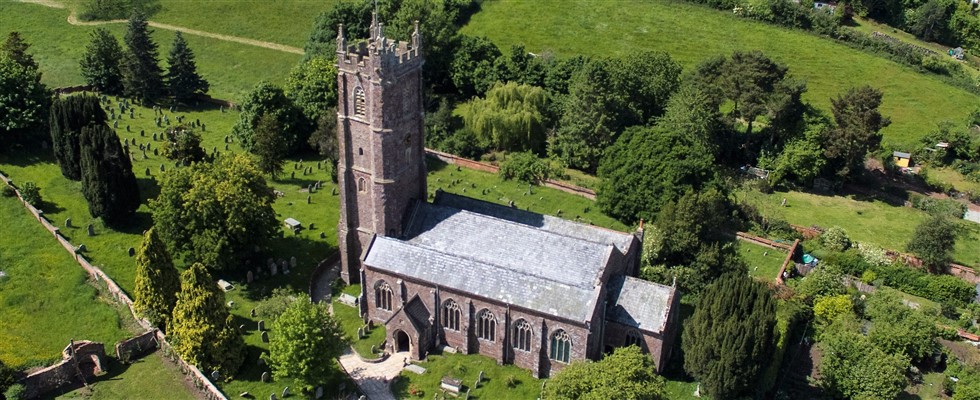
St Disen’s Church
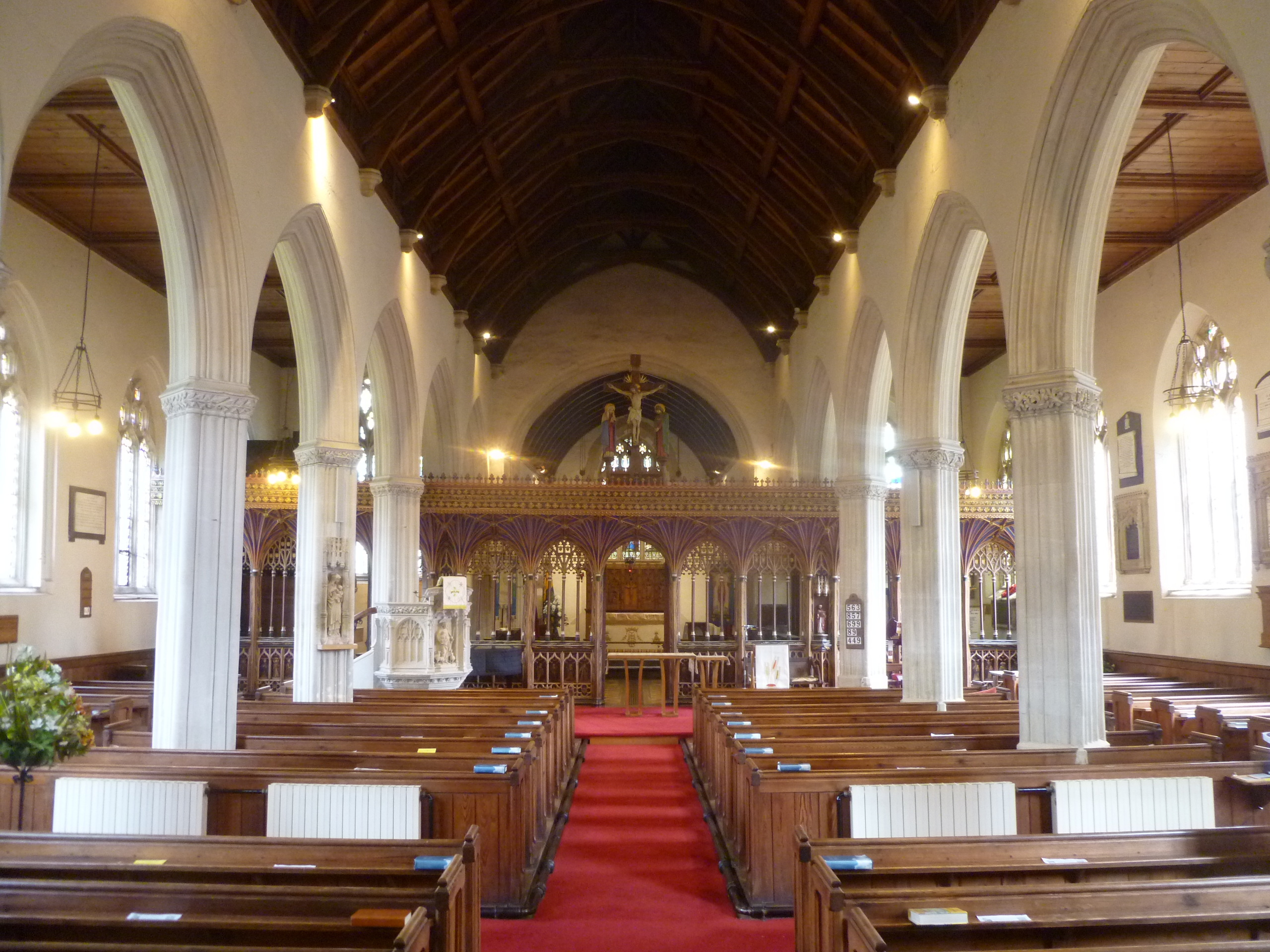
The afternoon sun slants through the windows of the south aisle as the clock in the tower of St Disen’s, in the Duchy town of Bradninch, strikes the hour. It is the first time I’ve ever sat in solitude in this church. It is a good moment. Sunlight dances across the pews, warming the mellow wood and highlighting flowers on the elegantly ornate pulpit. There is a tangible and bright sense of peace.
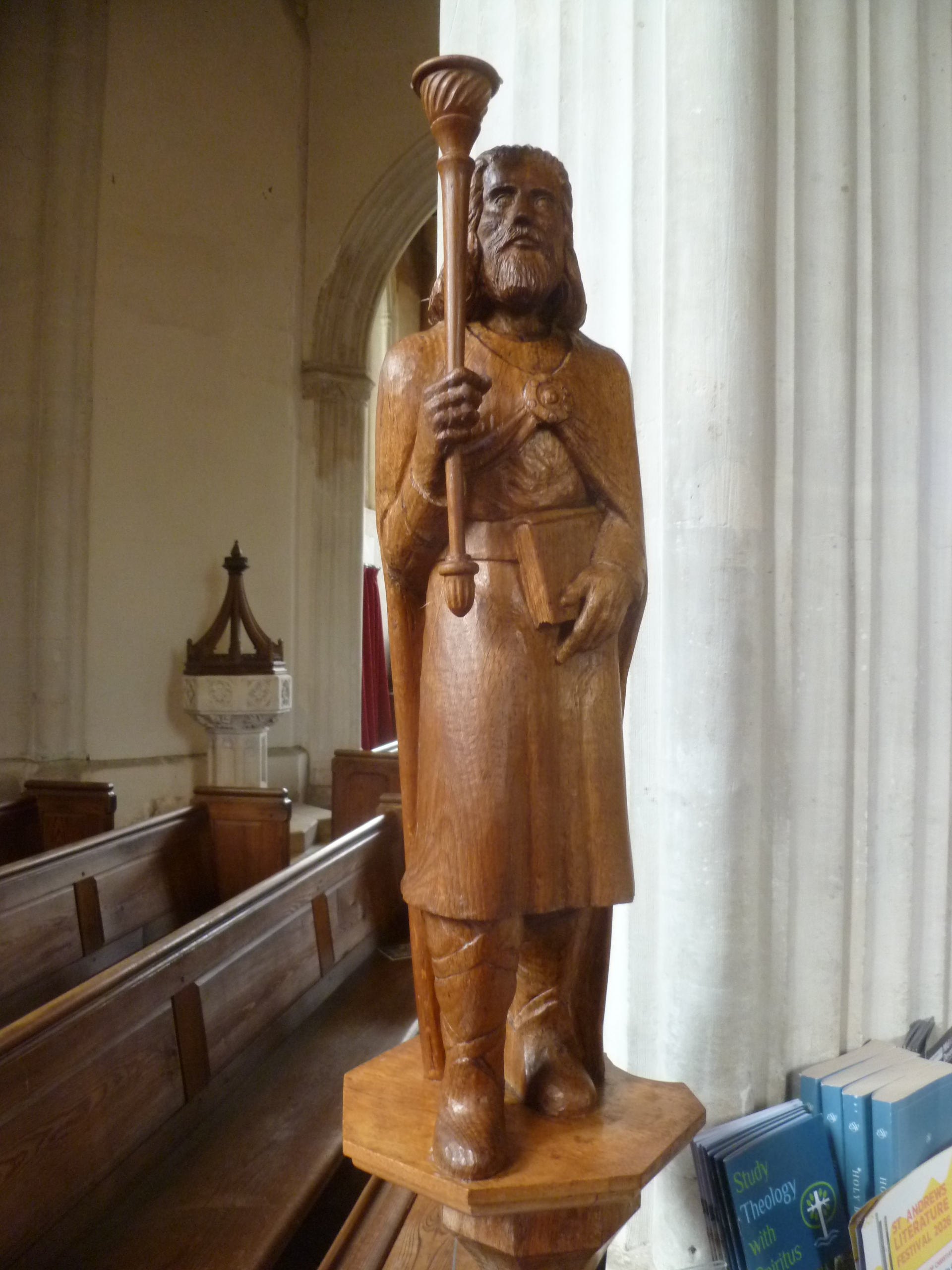
Not far from where I sit there stands a statue: an intricate and beautifully executed carving of St Disen, created by the late Jim Vallis, a man I well remember from Bradninch Festival Choir’s many performances in this church. The carving reminds us of the legend that evolved during the nineteenth century of a saintly man who was supposed to have arrived here from Ireland some 14 centuries ago.
The story goes that, on his way to Germany, this traveller who, allegedly, was to give his name to the church, plodded on foot from Cornwall, heading eastwards through the undulating landscape of early medieval Devon, to arrive in Bradninch where it sits above the meandering River Culm. Here he found no place of worship, so built a wooden church before continuing to Germany, where he eventually founded a monastery. He died in 674, aged around 80 years.
But the precise date of the present church’s founding is unknown. In 1208 King John granted the right to hold a fair in Bradninch on St Denis’s Day and early documentation indicates that the church was originally dedicated to St Denis, a third-century bishop of Paris and patron saint of France.
But in 1831 Samuel Lewis, in his Topographical Dictionary of England, called the church St Disen’s. This may have been the result of a misunderstanding brought about by the strong Devon dialect, or the result of an early typo. The exact truth behind what was effectively a newly fabricated saint will forever be concealed in the Devon mists, but during Victorian times Disen gradually took over from Denis in reference books. A conjectural account of the former’s Irish origins added roots to the story and the name stuck. It is the only church in the country to have this dedication, although it is referred to in its Historic England listing description as St Dionysius, which is the Latin form of Denis.
The building we see today has evolved through centuries of architectural styles. It is mostly fifteenth century Perpendicular, with earlier masonry surviving in places, including in the chancel and at the base of the magnificent 80ft tower – an arresting sight from outside, which rises loftily to its battlements and pinnacles. The south-east corner of the tower contains the polygonal stair turret and rises even higher than the rest of the structure. Restoration and rebuilding of the church took place from time to time, particularly in the mid to late nineteenth century, a period when so many churches underwent change.
The building is beautifully kept. Stained glass windows in the porch, one depicting St George, the other St Denis, are adorned with flowers, and a small wall safe here harks back to times past when visitors were invited to ‘contribute a penny each’ towards the restoration of the church – a sobering reminder of inflation!
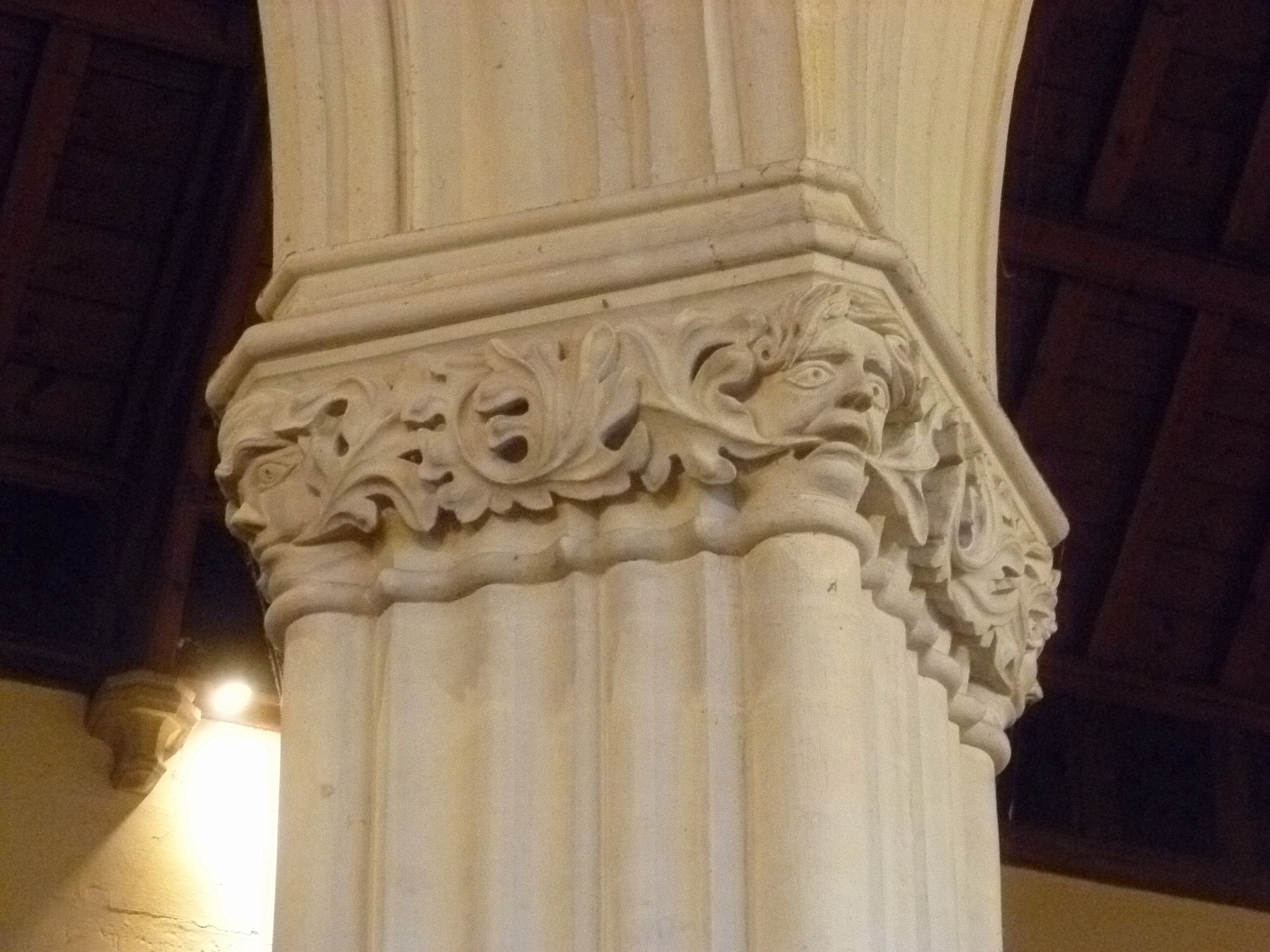
Inside, pale stone piers separate the aisles from the nave, sweeping gracefully upwards, bright in the sunshine, adding to the sense of elegance in this part of the church, which was heightened in 1841, although the roof itself dates from the 1889 restoration. I peer closely at a column just inside the south door. A Green Man peers back at me from the moulding, linking twenty-first-century St Disen’s with the time of pre-Christian worship, when vestiges of pagan faith were incorporated into the new religion.
The church is bristling with other interesting features. In the chancel, a marble double-oval monument dates from 1679 and commemorates Peter Sainthill, one-time owner of the Manor of Bradninch and a Member of Parliament. Nearby, behind the altar, the reredos is a memorial to Rev Charles Croslegh, vicar of St Disen’s and author of the 1911 work Bradninch, Being a Short Historical Sketch of the Honor, The Manor, The Borough and Liberties and the Parish. Croslegh was a great proponent of the Disen-from-Ireland story, which helped cement the legend.
The priest’s vestry is home to a piscina which came here from the now-demolished chapel at Trinity, a tiny hamlet situated a mile north of St Disen’s. The beautiful pulpit dates from 1889, and at the other end of the nave the 1842 font stands near the tower screen. Above this screen the visit of King Edward VIII in 1936 is commemorated in the Royal Arms.
The ‘villagey’ town of Bradninch has an abundance of royal connections, being a ‘Duchy’ town. Many surrounding farms and cottages belong, at the time of writing, to the Duchy of Cornwall, an arrangement harking back to the reign of Edward III, when his eldest son, the Black Prince, became the first Duke of Cornwall and Baron of Bradninch.

Although many of St Disen’s windows are mostly clear glass, which adds to the sense of lightness and space, they are decorative in a rather pleasingly understated way. There is also a wealth of stained glass, which dates from the nineteenth century. One window was designed by parishioner, Sarah Yeatman, as a colourful memorial to her parents. Another was donated by American congressman, George West, in memory of his mother, Jane West, who died in 1854 and is buried here. Click on the links to find out more about the stained glass and George West, one of St Disen’s American connections.
But the unmissable wonder of this church, which catches the eye the moment anyone walks in, is the glorious rood screen, considered to be one of the finest in Devon. Vibrant colour gleams from its fan vaulting and panels. The figures which stand in the canopied niches, and possibly came here from the Levant, look bright and alive. The clarity of the images in the painted panels is exceptional. The screen dates from the mid-fifteenth century and an inscription on its east face indicates that it was painted in 1528, the costumes depicted being typical of that era.
It was subsequently restored in 1843 by Bradley of Exeter, then recoloured in 1853 – a banner in the panel on the extreme right commemorates this work.
A smaller screen from the end of the fifteenth century, painted by a different artist, surrounds the bijou chapel at the eastern end of the south aisle, known as St George’s Chapel as one of the screen’s panels depicts St George. St Francis of Assisi and St Christopher are also here, and this is where we can admire the Sarah Yeatman window, above the chapel’s altar.
This small screen was originally in the chapel on the northern side of the chancel, where the organ now resides, but was relocated twice, arriving in its present location in 1917 when this little chapel was restored as a WW1 memorial, which is also when it was given the St George moniker, having previously been known as the Lady Chapel. More about the organ and the chapel can be found on our About pages.
The Royal arms which once topped the lengthy rood screen were removed to Bradninch’s Guildhall during the 1841 restoration; in 1620 they had replaced an earlier rood that was destroyed. The present rood is relatively modern. The main screen, which is more than 50ft in length and over 11ft high, is divided into 52 panels. There is some thought that the sixteenth century paintings may have superseded earlier images from the fifteenth-century – which, rather intriguingly, may still exist beneath.
The stories contained within these panels were part of the religious instruction of parishioners at a time when many people could not read or write, the characters bringing to life the stories of the Bible. And although the residents of Bradninch are now thoroughly literate, the panels continue to tell those stories today.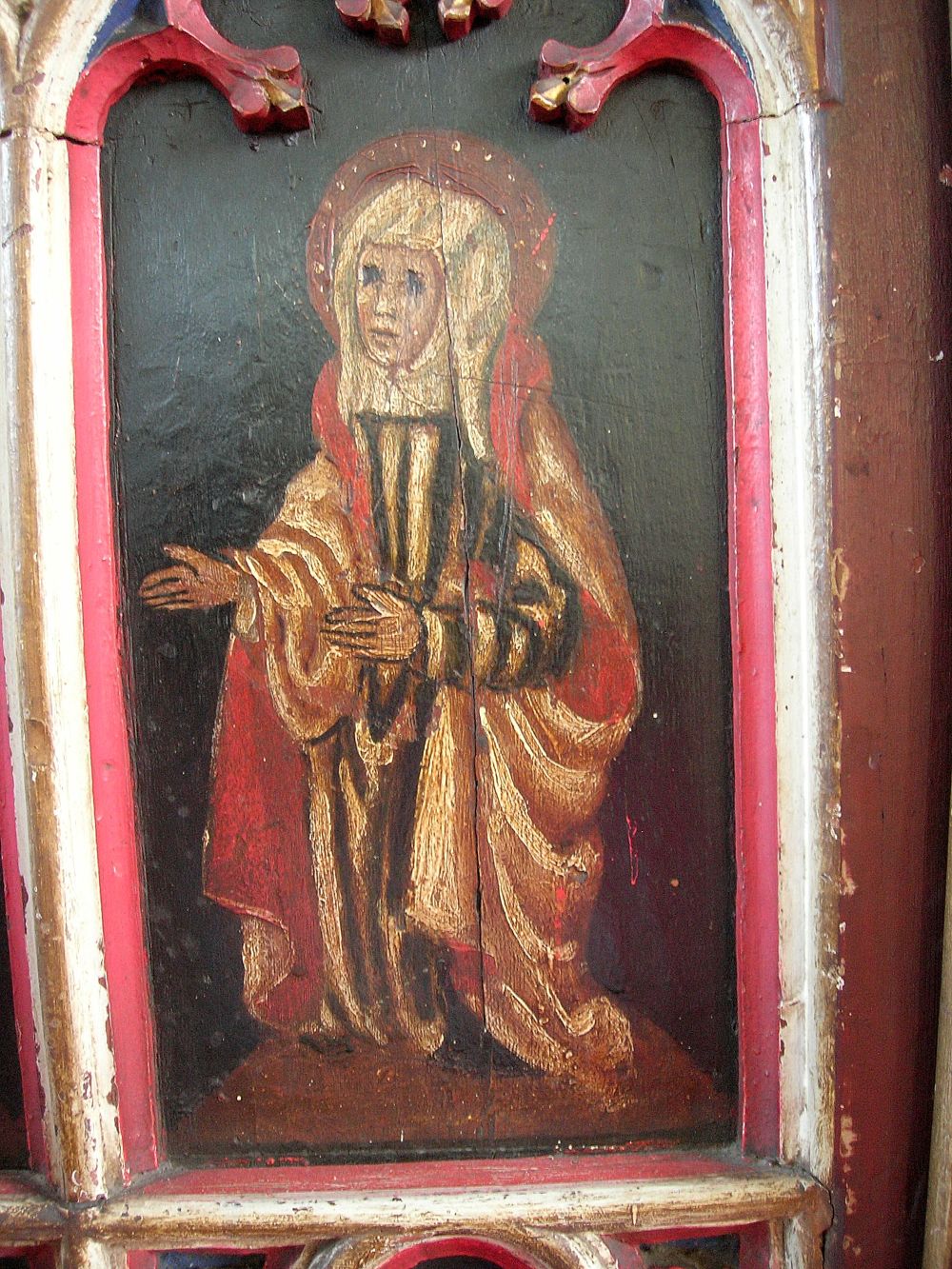
For instance, the panels within the right-hand side of the central door, depict ‘the salutation of Elizabeth’, with the haloed Elizabeth appearing in the right-hand panel of the two, from which she raises her hands towards Mary, in the left-hand panel. The whole ensemble is a depiction of Mary’s visit to Elizabeth following the visitation by the Angel Gabriel. The story tells that when Elizabeth hears Mary’s voice she feels the baby she is carrying – the future John the Baptist – leap for joy and she cries out in realisation that Mary’s child is the Son of God.
In St George’s Chapel the panels have been similarly researched. Here, number seven shows the Archangel Michael, the only angel other than Gabriel to be actually named in the Bible. St Michael’s task, we are told, is to fight against the powers of Satan, and he is shown in the panel with a dragon, representing his devilish adversary.
Despite the structural changes that have taken place down the centuries, there is a great sense of continuity and cohesion within St Disen’s, both architecturally and in the sense of community that the church embodies.
St Disen’s vicar, Revd Olly Mears, talks of the ‘living faith community’ embodied in the church, ‘a place where people can experience and share the love of God’. Even non-churchgoers in Bradninch will be aware of this. Every Wednesday morning a pop-up café operates in the church hall, offering food, drink and friendship to whoever feels like dropping in – all free of charge. The Hall itself, at the bottom of the lane that leads to the church, is worth a visit – and not just for the coffee!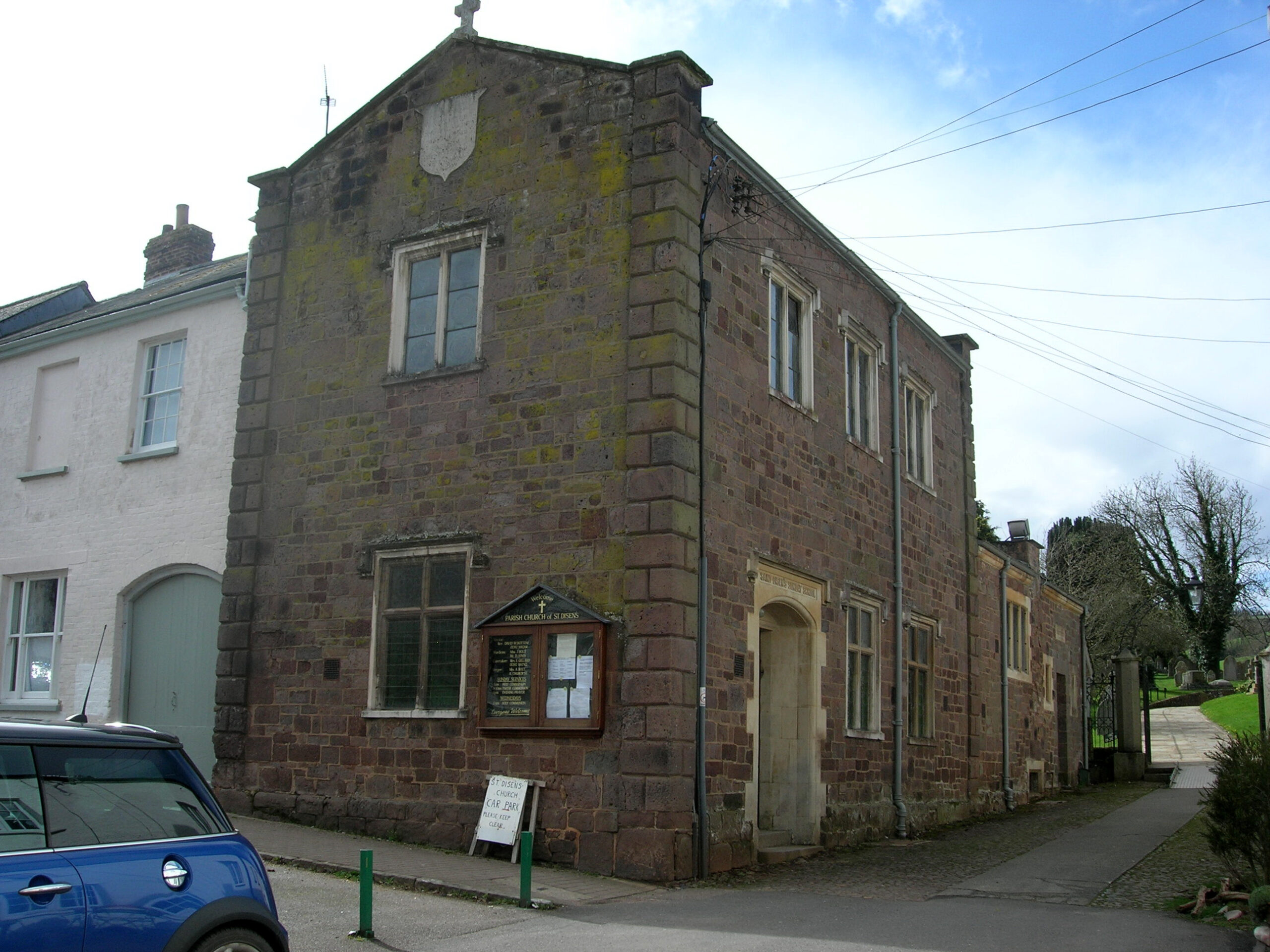
It was built as a Sunday School in 1838. The windows are noteworthy as they contain early twentieth-century coloured glass and display heraldic motifs of numerous families connected with Bradninch. Historic England states that ‘one roundel is an interesting piece of fake seventeenth-century work which contains the names of the makers and donor’ the latter being Charles Croslegh, whom we encountered in the chancel, behind the altar. The attractive, modern-looking window on the stage shows aspects of Bradninch and its environs.
Every summer, as part of the town’s music festival, Olly and the St Disen team decamp to the nearby inn, The Castle, for ‘Beer and Hymns’. It is one of the festival highlights, the whole pub joining in with roof-raising gusto. This is ‘Church in the Community’ as you’ve never seen it, and a ‘new’ tradition that will be part of the future heritage.
So, St Denis or St Disen, whatever the dedication, this lovely church has served to meet the needs of the parish since medieval times. ‘Bradenese’, as it was probably known at the time of the church’s first foundation, was a very different settlement then, but the sense of community that grew and thrived around the church is still here.
A local resident once described Bradninch as ‘like living in a warm hug’; whoever built the first church, were they able to slide through time and revisit, this is something that they would undoubtedly recognise.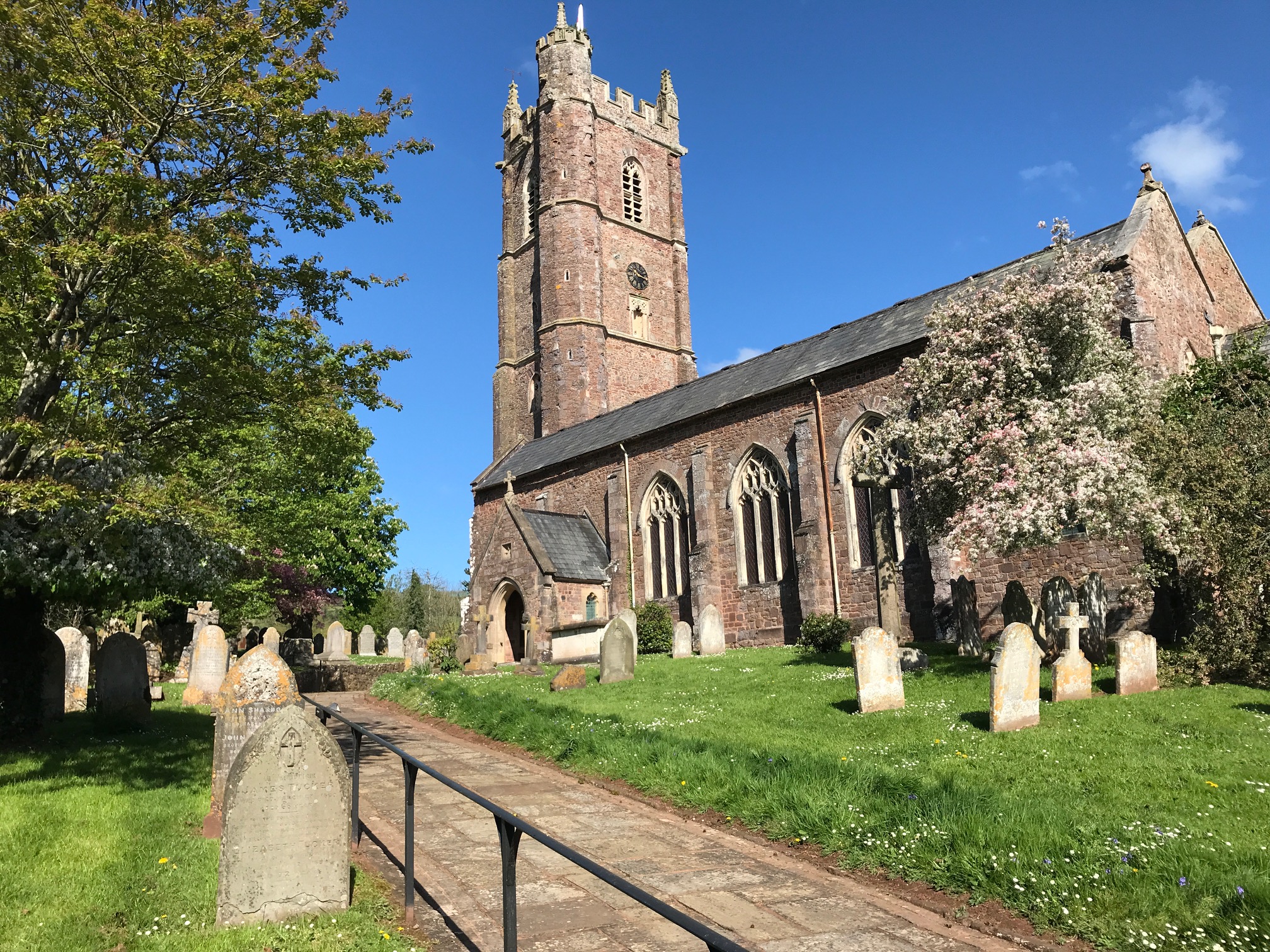
Simone Stanbrook-Bryne. First published in This England, Summer 2025